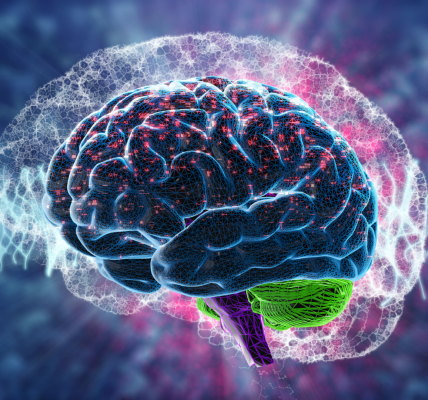

How AI is Changing Scientific Research: Transformations and Innovations in Discovery

Artificial intelligence is transforming the landscape of scientific research in profound ways. AI enhances data analysis, accelerates discoveries, and fosters innovation across various scientific disciplines. Researchers are now equipped with tools that can process vast amounts of information quickly, leading to faster experimental results and more accurate predictions.
The integration of AI into research methodologies allows scientists to tackle complex problems that were previously insurmountable. Machine learning algorithms, for instance, help identify patterns and correlations in data that may not be easily visible to the human eye. This capability not only improves the efficiency of research processes but also opens doors to groundbreaking advancements.
As technology continues to evolve, the collaboration between AI and scientific inquiry is expected to deepen. By leveraging AI’s potential, researchers can focus on more creative and strategic aspects of their work, propelling science forward. The synergy between AI and science signals a promising future for innovation and discovery.
Impact of AI on Various Scientific Domains
AI is making significant strides across various scientific fields. Its capabilities enhance research methodologies, improve efficiency, and provide novel insights that drive innovation and decision-making.
Revolutionizing Health and Medicine
AI is transforming health and medicine through improved diagnostics and personalized treatment plans. Machine learning algorithms analyze vast datasets, identifying patterns that help predict diseases at early stages. For instance, AI systems can assess medical images with high accuracy, assisting radiologists in detecting conditions like cancer more effectively.
Additionally, AI is enhancing drug discovery, reducing the time and cost associated with bringing new therapies to market. By simulating molecular interactions, AI accelerates the identification of viable candidates for further testing. The incorporation of AI tools in healthcare promises to optimize patient outcomes and streamline processes.
Advancing Environmental Science and Climate Change Research
AI plays a crucial role in environmental science, particularly in analyzing climate change impacts. Through advanced data analytics, researchers gain insights into weather patterns, leading to better predictions and preparedness strategies. Machine learning models can process satellite data, helping scientists monitor deforestation, pollution levels, and wildlife populations.
AI-driven simulations allow for real-time modeling of climate scenarios, which informs policy and conservation efforts. These tools make it possible to evaluate the efficacy of various interventions and improve resource management. AI thus significantly enhances understanding and responsiveness to environmental challenges.
Transforming Agriculture Through AI Innovations
In agriculture, AI technologies are revolutionizing crop management and food production. Precision farming uses data analysis to optimize planting, watering, and harvesting schedules. Drones equipped with AI monitor crop health, identifying pest infestations and nutrient deficiencies early.
Furthermore, AI assists in predicting yield outcomes by analyzing past performance data and environmental variables. This helps farmers make informed decisions, ultimately increasing productivity and sustainability. Innovations like autonomous machinery also contribute to efficiency, reducing labor costs while enhancing operational capabilities.
AI in Energy Sector Development and Optimization
AI contributes significantly to energy sector advancements, improving system efficiencies and facilitating the transition to renewable sources. Smart grids utilize AI algorithms to manage electricity distribution, ensuring balance between supply and demand. These systems enhance grid reliability and reduce energy loss.
Moreover, AI aids in predictive maintenance for infrastructure, identifying potential failures before they occur. This proactive approach can lower operational costs and enhance safety. In renewable energy, AI optimizes production by forecasting energy generation based on weather patterns, making sustainable energy more accessible and reliable.
AI-Driven Techniques Enhancing Research
AI technologies are transforming scientific research through sophisticated data analysis, predictive modeling, and automation. These advancements improve accuracy and efficiency, driving innovation across various fields.
Machine Learning and Data Analysis
Machine learning (ML) plays a crucial role in processing large datasets. It enables researchers to uncover patterns that traditional methods might miss. Algorithms can handle both structured and unstructured data, enabling the extraction of meaningful insights.
In fields like genomics and climate science, ML techniques analyze complex data sets to identify trends and correlations. For instance, researchers use ML to predict disease outbreaks or to discover new drug candidates based on genetic information.
Key ML Techniques:
- Supervised Learning: Learns from labeled data to make predictions.
- Unsupervised Learning: Identifies patterns in unlabeled data without pre-existing categories.
- Reinforcement Learning: Optimizes actions through reward-based learning.
Neural Networks and Advanced Predictive Models
Neural networks are a subset of machine learning inspired by the human brain’s architecture. They excel in tasks like image and speech recognition, making them valuable in research.
In predictive modeling, neural networks analyze historical data to forecast future events. For example, in weather forecasting, deep learning models process vast amounts of atmospheric data to enhance accuracy in predicting storms.
Advantages of Neural Networks:
- Capable of processing complex, non-linear relationships.
- Adaptable to various data types, enhancing their utility in diverse research domains.
- Continuous learning improves model performance over time.
Automation in Scientific Experiments
Automation significantly increases the efficiency and reproducibility of scientific experiments. AI-driven systems can automate routine tasks such as data collection and analysis, allowing researchers to focus on higher-level problem-solving.
Robotic systems, combined with AI algorithms, can conduct experiments with minimal human oversight. This reduces the time required for experimentation and increases precision in measurements.
Benefits of Automation:
- Consistency in experimental procedures leads to reliable results.
- Rapid experimentation accelerates the pace of discovery.
- Reduces human error, enhancing data integrity.
These AI-driven techniques are reshaping the landscape of scientific research, driving innovations that were previously unimaginable.
Socio-Economic Implications of AI in Science
The integration of AI into scientific research has broad socio-economic effects, influencing ethical considerations, industry innovations, investment strategies, and educational frameworks.
Ethical and Societal Considerations
AI technology raises significant ethical questions in scientific research. Issues such as data privacy, algorithmic bias, and the potential misuse of AI are crucial.
Transparency in AI systems ensures that their operations are clear to stakeholders. This trust fosters collaboration between scientists and the public.
Moreover, the societal impact includes shifts in workforce dynamics. As AI automates various tasks, there could be job displacement in traditional roles. It becomes essential to navigate these changes thoughtfully by ensuring that ethical standards guide AI application in science.
AI’s Role in Industry and Business Innovation
AI is reshaping industries by driving innovation and improving efficiency. In sectors like pharmaceuticals, AI accelerates drug discovery through predictive modeling and data analysis.
Businesses benefit from AI-enhanced research by reducing time-to-market for new products. This competitive edge fosters increased investment in AI-driven technologies.
Moreover, startups focusing on AI solutions in scientific research attract significant funding. This trend demonstrates the growing intersection of science and business, creating a dynamic ecosystem for innovation.
Investment Trends in Scientific AI Ventures
Investment in AI-powered scientific ventures is skyrocketing. Venture capitalists recognize the potential of AI to revolutionize research and development across various fields.
In 2024, global investments in AI-related science start-ups surpassed $10 billion. Key sectors receiving funding include biotechnology, environmental science, and health tech.
Furthermore, government initiatives support funding. Increased grants and programs aim to enhance AI research capabilities in academic institutions, fueling further investment.
Skill Development and Educational Shifts
The rise of AI in scientific research demands new skills from the workforce. Educational institutions are responding by adapting curricula to include AI training and data analysis.
Programs now focus on interdisciplinary learning, combining science, technology, engineering, and mathematics (STEM) with AI expertise. This preparation equips students for future job markets shaped by AI.
Additionally, continuous professional development is crucial. Scientists and researchers are encouraged to upskill regularly to keep pace with technological advancements. Training initiatives by industries foster a culture of lifelong learning in scientific communities.
The Future of Scientific Research and Publishing
AI is poised to fundamentally transform scientific research and publishing. The shifts in scientific journals, the ability to predict future events, and enhancements in communication and collaboration will shape the landscape of how knowledge is shared and developed.
Transformation of Scientific Journals and Publishing
AI technologies are redefining the editorial process in scientific publishing. Algorithms can now assist in manuscript review by identifying potential plagiarism and assessing the novelty of research. This results in a more efficient peer review process.
Additionally, AI can analyze large datasets to recommend suitable journals for publication, increasing the visibility of research. Some publishers are adopting AI-driven models to evaluate the impact and reach of articles, allowing for more tailored dissemination of information.
Forecasting Future Scientific Events and Discoveries
Predictive analytics enabled by AI can forecast trends and breakthroughs in scientific research. By analyzing historical data and current research trajectories, AI systems can identify promising areas for exploration.
Such predictive capabilities can help researchers focus on high-impact projects and guide funding agencies in their grant allocations. These tools can also signal emerging fields before they gain widespread attention, fostering innovation and collaboration.
The Role of AI in Scientific Communication and Collaboration
AI enhances communication among scientists, streamlining collaboration across disciplines. Tools powered by AI can facilitate real-time data sharing and improve interactions in mixed research teams, regardless of their physical locations.
Moreover, AI-driven platforms can connect researchers with complementary skills, promoting partnerships that enhance the quality and reach of projects. AI chatbots and virtual assistants are also emerging as resources, delivering immediate information and directing researchers to relevant literature and resources.